Why do construction and mining fleets face the worst puncture environment?
Construction and mining sites combine the highest debris density of any operating environment with some of the most expensive vehicle tires - and a machine down on site halts the crew behind it, not just the vehicle.
You already know what the site does to tires. Rebar cut-offs, form nails, roofing wire, aggregate with sharp faces, and haul roads shared with tracked equipment - these are not road conditions. They are conditions designed, by accident, to destroy pneumatic tires. Construction site managers in Metro Cebu consistently report the highest per-vehicle puncture incidents of any fleet segment, with SRP development and reclamation work in Mandaue and Lapu-Lapu adding new debris layers monthly.
The cost consequence is also highest here: construction equipment tires can cost ₱20,000 to ₱80,000 per unit depending on the machine. A single destroyed casing that a liner could have protected pays for the installation across an entire support vehicle fleet.
What does the gel liner suit - and where are its honest limits?
Gel liners suit site support vehicles, haul road runners, and on-road transit between sites. For extreme off-road machines running over sharp rock continuously, foam inserts are a better fit - and we will say so clearly rather than oversell.
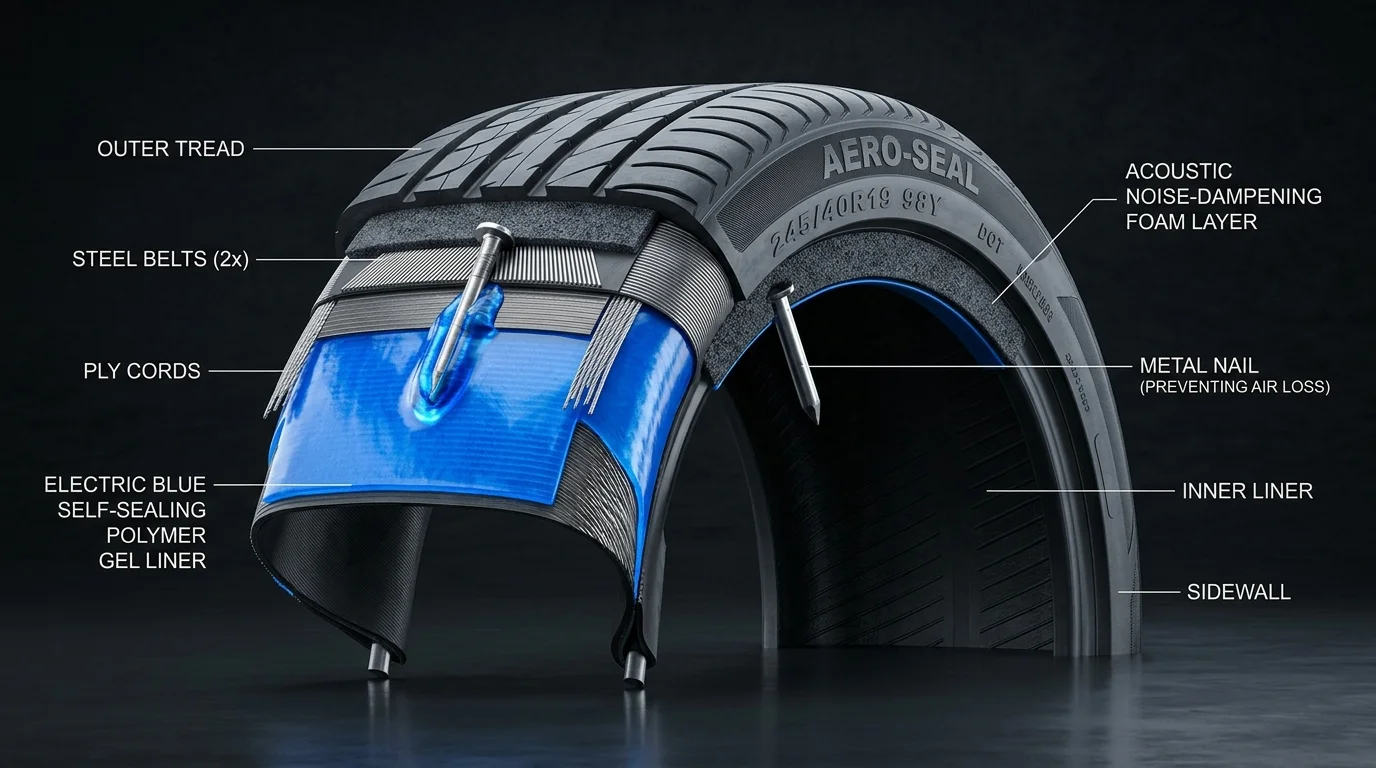
Best fit for gel liners in construction/mining: Project office and supervisory vehicles, cargo trucks and lorries moving between the site and suppliers, fuel tankers and water trucks on haul roads, pick-up trucks used by site management. These vehicles use standard tire profiles on primarily road-type surfaces, and the gel liner's self-sealing mechanism directly prevents the most common site flat type.
Where foam inserts may suit better: Loaders, dump trucks, and heavy plant running continuously over sharp-edged rock debris where a gel liner's sealing response is outrun by the volume and severity of penetrations. We will tell you this during the assessment rather than fit a product that cannot perform. Read the full comparison at tire puncture protection types compared.
Protect the Vehicles You Can - Starting Today
Site yard and compound fitting. Volume rates from 5 units. Honest assessment of what fits your vehicle types before any work begins.
Call or WhatsApp +63 927 327 2170
What does protection cost for site support vehicles?
Pickup trucks and 4x4 site vehicles start at ₱11,000 per set. 6-wheel site lorries start at ₱15,000. Fleet accounts for 5 or more units receive volume pricing. We quote per configuration after the site assessment.
₱11,000+
Pickup / 4x4 Site Vehicle
₱15,000+
6-Wheel Site Lorry / Truck
Custom
Mixed Site Fleet (5+ units)
Full rate schedule at tire liner pricing. Fitting at your yard or site compound — no vehicle off-site required.
Can you fit vehicles at a live construction site compound?
Yes. Our mobile unit operates inside site compounds, contractor yards, and equipment staging areas. We bring all equipment — no power hookup required. We coordinate with your site safety officer on access and PPE requirements.
Our Hilux runs on rough site roads daily. Will it hold?
Yes, for tread punctures — which are the majority of site flats. Nails, rebar offcuts, wire fragments: the gel seals these as they happen. Sidewall failures from extreme kerb impact are outside scope for any liner system — and we say this clearly.
How quickly can we get a site fleet assessed and fitted?
Assessment call takes 10 minutes. We confirm vehicle types, tire sizes, and access. Fitting is typically scheduled within 3 to 5 working days. A 5-vehicle mixed fleet (3 Hilux + 2 lorries) takes one full day at your compound.
See also: puncture protection types compared | truck and bus protection
Make Your Site Vehicles Fight Back.
We assess your vehicle types, confirm what fits, and quote only what will work. No guesswork, no overselling. Fitting at your yard or compound.