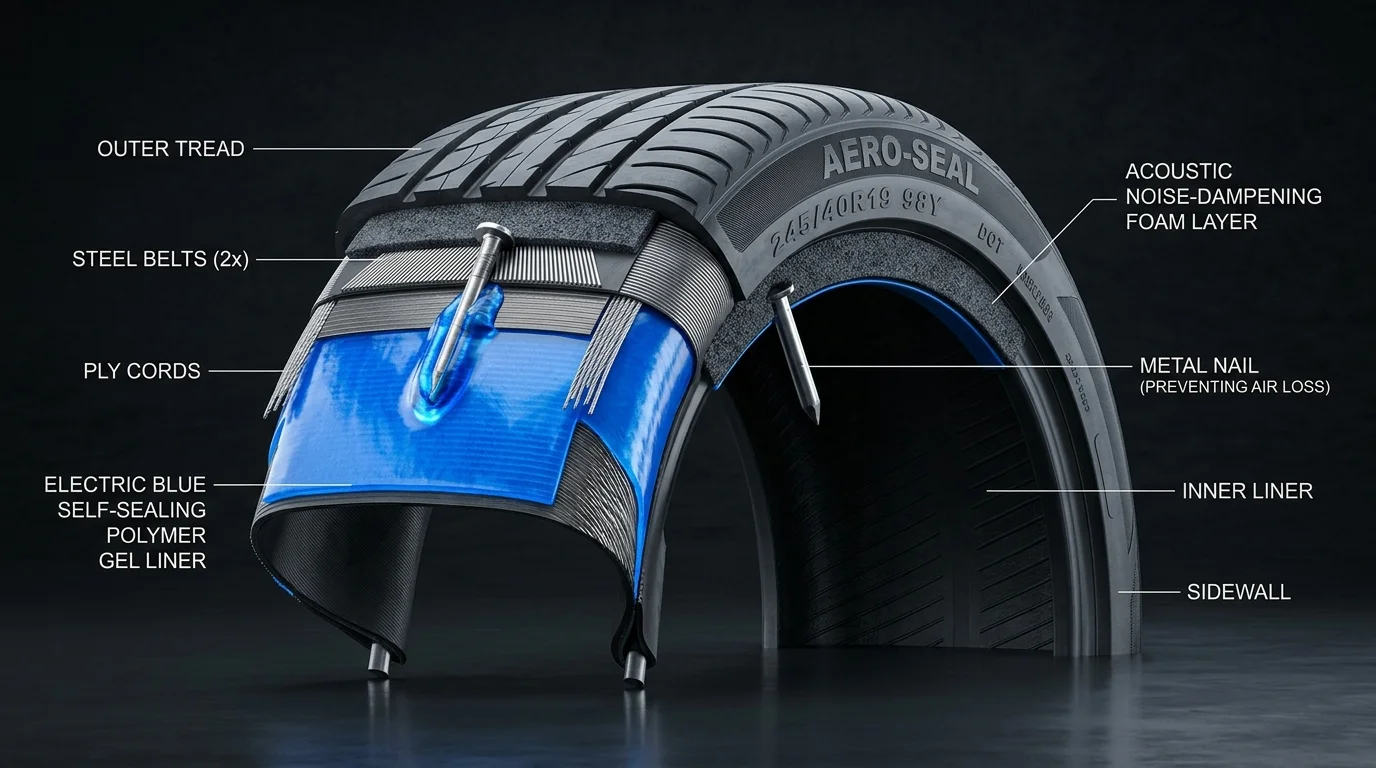
Why do government fleets benefit from puncture protection?
Vehicle downtime interrupts public service delivery and tire replacement is a recurring, documented budget expenditure. Gel liners reduce both by sealing punctures before they take a vehicle off duty.
Government and LGU fleet managers operate under a different accountability structure than private fleets. Every tire replacement is a documented expenditure against a budget line. Every vehicle off duty is a reduction in public service capacity that must be explained. The combination of recurring tire cost and service continuity makes puncture prevention a straightforward value proposition for public fleet management - one that can be justified with clear numbers rather than testimonials.
Metro Cebu government fleets - city and municipal patrol vehicles, service trucks for barangay operations, ambulances, and official transport - run the same nail-scattered roads as private vehicles, often in higher daily mileage cycles. The puncture rate and replacement cost are real and recurring. Prevention reduces both in a measurable way that budget reporting can capture.
How does this reduce a measurable recurring cost - and is it documentable?
Yes. Installation cost, vehicle coverage, and service documentation can be provided in a format suitable for procurement records. The reduction in tire replacement frequency is trackable against historical expenditure data your fleet unit already maintains.
We provide service documentation per vehicle: installation date, liner specification, technician certification, and post-installation balance confirmation. This is suitable for inclusion in procurement logs and can be issued with official receipts for COA-compliant government purchasing.
The financial case is straightforward: the liner installation cost is a one-time capital expense per tire set. The savings are recurring - reduced tire replacement frequency, reduced roadside incident response costs, and maintained vehicle duty hours. For the downtime cost framework, read the real cost of fleet vehicle downtime in Cebu.
Motor Pool Fitting Across Metro Cebu LGUs
On-site at your motor pool or vehicle compound. Full documentation provided. Contact us to discuss fleet coverage and procurement requirements.
Call or WhatsApp +63 927 327 2170
What does government fleet installation cost and what documentation is provided?
Rates are per vehicle based on tire configuration. We issue official receipts, a per-vehicle installation certificate, and a service summary suitable for COA-compliant procurement documentation. Contact us to confirm your vehicle types and receive a formal quotation.
₱9,000+
Patrol Car / Service Vehicle
₱15,000+
Service Truck / Ambulance
Formal
Quote
Full Motor Pool Account
We provide: official receipt (BIR-registered), per-vehicle installation certificate including date, technician, and liner specification, and a consolidated service summary for the full motor pool engagement. These documents are structured for inclusion in LGU procurement records and can be issued in hard copy or digital format as required.
For agencies requiring a canvass process, we can provide a formal quotation on letterhead with full scope of works specification. Contact us with your fleet composition and we will prepare documentation within 2 working days.
How is installation scheduled for an active government motor pool?
We coordinate directly with your motor pool officer to schedule fitting during non-operational windows — typically early morning or weekends — so no vehicle is taken off duty during active service hours.
Does the liner affect vehicle inspection compliance?
No. The liner is internal and not visible during LTO or standard vehicle inspection. It does not affect tire pressure, load rating, or any measured parameter in a standard government vehicle roadworthiness check.
Can we pilot with one vehicle before committing the full pool?
Yes. A single-vehicle pilot installation is available at the standard rate with full documentation. This allows your fleet manager to verify performance and prepare a documented recommendation before a full motor pool commitment.
Further reading: fleet vehicle downtime cost analysis | installation process
Reduce a Recurring Budget Line. Measurably.
Motor pool fitting during non-operational windows. Full procurement documentation. Pilot single-vehicle option available.