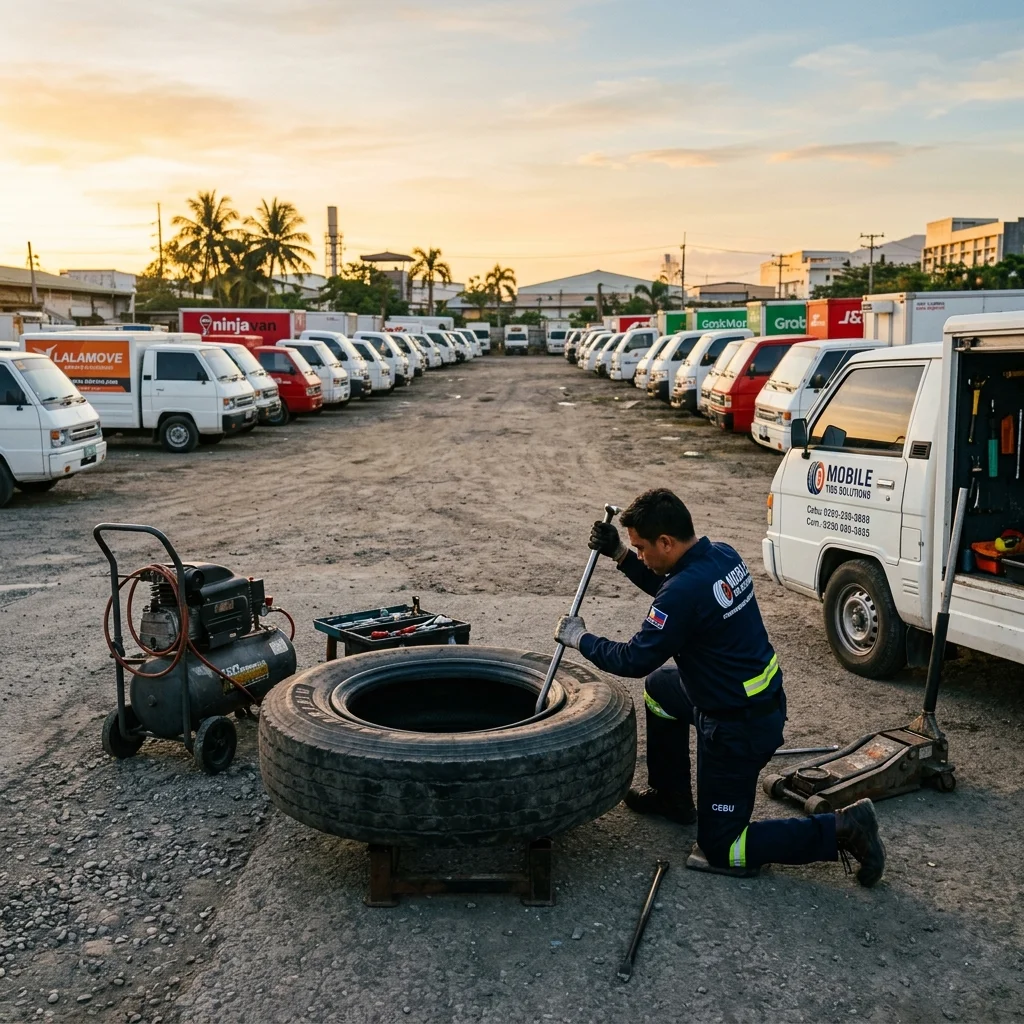
What does a single flat tire actually cost a fleet?
More than the tire. Add the roadside change, the driver's idle hours, the delayed or missed delivery, and the schedule knock-on. The ruined tire (₱9,000 for a car to ₱15,000-40,000 for a truck) is often the smallest line.
For operations managers running logistics networks in Metro Cebu, tire cost calculations are often incomplete. Buying a replacement tire is merely the visible transaction. The real damage is done by operational disruption.
When a delivery van gets a puncture on the Mandaue-Cebu corridor at rush hour, the route is immediately compromised. The vehicle sits active but immobile for hours, racking up driver wages without generating revenue, delaying scheduled drops, and creating route backlogs that disrupt the following day's schedule.
The hidden costs most fleets don't count
Driver downtime, missed delivery windows, customer trust, emergency call-out fees, and the admin time to sort it all. The actual direct loss exceeds the tire replacement cost by 3x.
A thorough audit of single fleet flat tire incidents reveals five distinct hidden cost factors:
- 1. Idle Driver Wages: Paying driver salary and cargo helper rates while they stand beside the road.
- 2. Customer SLA Violations: Direct delivery fines or contractual penalties for failing to meet route timelines.
- 3. Towing or Mobile Roadside Fees: Paying external service units to patch or transport the vehicle.
- 4. Customer Churn: The long-term reputational loss of missing delivery commitments.
- 5. Dispatch Administrative Time: Re-routing other units and processing replacement logs.
How often do fleet vehicles get flats in Metro Cebu?
Commercial fleet vehicles average 1.5 flats per year due to road debris, port area construction, and ongoing highway upgrades. This rates higher for dump trucks and mixers.
Metro Cebu's transit corridors contain specific puncture threats. The industrial areas in Mandaue, the dock sectors near Lapu-Lapu, and the extensive South Road Properties (SRP) highway corridors feature a high density of nails, metal shards, and construction debris.
For delivery vans routing through these zones daily, punctures are not occasional bad luck. They represent a statistically predictable operating expense that scales directly with your total wheel count.
Prevention vs reaction - the cost comparison
Reacting to flats is unpredictable and expensive per incident. Sealing punctures before they strand a vehicle turns a variable emergency cost into a small fixed one.
Reacting to flats means writing blank checks for tow trucks and lost route hours. By choosing to prevent punctures before they happen, you control the variable. The acoustic gel tire liner pad turns a chaotic emergency expense into a predictable, budgetable vehicle asset. Learn more about fleet tire protection service.
How much can a fleet save with gel liners?
A typical fleet of 10 vans saves ₱82,000 annually by avoiding flat tire downtime. The acoustic gel liner protection pay-back occurs within a single avoided roadside incident.
The return on investment (ROI) is rapid. Because our polyurethane acoustic lining pads are durable, they can be removed and re-seated inside new tire sets when the old tread wears out. This means a single investment pays dividends across multiple tire replacement cycles. See complete tire liner pricing.
Schedule a Downtime Audit
Our technical dispatch team can visit your depot to conduct a complete tire health inspection and compile a customized downtime savings projection for your business.
No obligations required. Audit includes custom vehicle rim sizing measurements.